
Do these sentences resonate? 👇
- “I’m still paying off last year’s holidays while everyone’s already planning the next one.”
- “I told myself I’d ‘just put it on the card and figure it out later’… and now it’s later.”
- “I want to be generous and have fun, but I’m tired of starting every new year in the red.”
As you’re looking over the cozy holiday photos and how happy you or your loved ones looked with their presents, banking app sends a notification about the new credit card balance due.
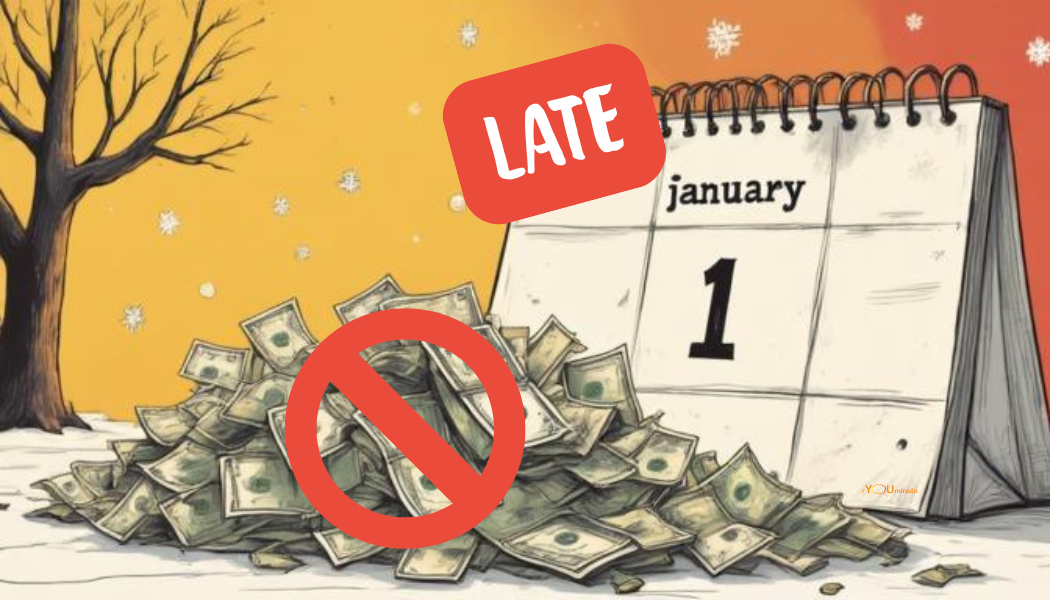
For a lot of us (especially if we’re first-gen, BIPOC, low-income, hourly, or supporting family), the holidays don’t just end on December 31. The spending, the Buy Now, Pay Later, the credit card balances all roll into the new year with us.
Let’s understand what happened, seeing the system clearly, and choosing what to do next. No shame included.

“You’re your own person, too, and your own financial wellness matters.” – Giovanna González, author of Cultura & Cash
How much are we really spending on the holidays?
Holiday hype is big business in general:
- In 2025, 37% of Americans took on holiday debt, with an average of $1,223, and many expect to take months to pay it off.
- About 31% of 2024 holiday shoppers who used credit cards still hadn’t paid off those balances a year later.
Gen Z is in this mix in specific ways:
- Nearly 74% of Gen Z planned to spend more on holiday expenses in 2024 than in 2023, despite cost-of-living stress.
- Gen Z is leading the shift to Buy Now, Pay Later (BNPL): in the 2024 holiday season, 54% of Gen Z used BNPL, compared to 50% using credit cards—a first in J.D. Power’s data.
- Younger borrowers (18–24) carry a larger share of their debt in BNPL compared with older groups, and missed/late payments on BNPL are rising.
For underrepresented young adults, this sits on top of lower average earnings, student loans, and family responsibilities. We’re navigating inflation, low wages, and a debt-based economy that targets us.
Why do we end up here? (It’s not “no discipline.”)
A few forces collide:
- Societal expectations: Holidays are annual and predictable, and so is the pressure. We’re expected to show up with gifts, travel, food, and “experiences,” even when our income doesn’t match that script.
- End-of-year ‘treat yourself’ culture: After a long year, splurging feels earned. TikTok, ads, and brand campaigns push “you deserve this,” without mentioning interest rates or due dates.
- “Good deals” + BNPL normalization: Heavy promotion of sales and 0%-for-now offers can make spending feel harmless. But reports show BNPL usage and regret rising together.
- More context:
- If we’re first-gen or low-income, we might not have grown up with clear education on credit, interest, or predatory lending.
- If we’re BIPOC, LGBTQ+, immigrants, or supporting family, we may feel extra pressure to send money or gifts home, or to “show up big,” even when we can’t truly afford it.
- Subprime and deep subprime borrowers, who are more likely to be younger and from marginalized communities, make up the majority of BNPL originations.
So no, this isn’t just about “bad choices.” It’s also about systems that normalize debt as the ticket to participation.
Quick check: what are we actually doing?
Underneath the receipts, we're practicing our values:
- We value connection (not showing up empty-handed).
- We value care (giving to family, especially elders and younger siblings).
- We value belonging (not feeling like the “broke one” or “serious one”).
Now the question is how we can live those values while bringing stability to the future us without compromising ourselves int he short term, show love in ways that cost less money but still feel meaningful, and reset what’s “normal” in our friend groups or families for future holidays?
What are we working with now?
Instead of jumping straight to “I need to fix everything,” we start with a simple taking-stock framework.
1. Wants vs. needs (no shame attached) 👇
- Needs: rent, food, meds, minimum payments, transportation, essential bills.
- Wants: gifts, extra streaming, eating out, new clothes, upgrades, aesthetics.
We’re not banning wants. We’re just getting honest about what keeps us safe vs. what’s flexible.
2. Money targets instead of vague resolutions 👇
Replacing “be better with money” or “get out of debt someday,” we focus on short-term, weekly actions. For example, “I’ll pause one subscription and redirect that money to debt.”
And then we automate it the payment to make recurring dents on the debt. Also, automatic payments (at least the minimum) help to avoid late fees, might get you a small discount at the billing company, and helps you put money aside without even having to think about it.
3. But how do we save while paying off debt? Do we do both? 👇
There’s a balance:
- If interest is high (like 20–30% APR), extra payments toward that debt usually save us more than parking that same money in savings.
- But having zero savings keeps us stuck. Every small emergency goes back on the card.
A realistic middle path:
- Aim for a small, non-zero emergency buffer (even $100–$300).
- Then direct extra money primarily to debt (especially high-interest accounts), so we’re not in the same spot next year.
Which payoff framework do we use: snowball or avalanche?
There are a lot of financial frameworks out there. But if you want another that’s widely popular and easy to adapt: use the snowball and avalanche method. Plus one rYOUminate twist.
Regardless of which you choose, know that there's no morally superior choice. The “best” method is the one you will actually stick with.
List all your debts in one place:
- Lender / card / BNPL app
- Balance
- Minimum payment
- Interest rate (if you can find it)
- Debt snowball = feelings + momentum
- Pay minimums on everything.
- Aim extra money at the smallest balance first.
- Once that’s gone, roll that payment into the next smallest.
- Best if YOU need quick emotional wins to stay motivated.
- Debt avalanche = math + savings
- Pay minimums on everything.
- Aim extra money at the highest interest rate first.
- Once that’s smaller, roll that payment into the next highest interest.
- Best if YOU want to pay less in interest overall and can stay committed without quick “paid off!” hits.
You can frame it like this:
- ❄️Snowball = “I need a quick win to feel like this is possible.”
- 🏔️Avalanche = “Every dollar counts—let’s attack the most expensive debt first.”
- See it: Write down your debts and circle one “First Target.”
- Choose one target: Decide if you’re going snowball (smallest balance) or avalanche (highest interest), and pick that account.
- Set it & live your life:
- Automate one small extra payment to that First Target every week or month.
- Check in on your progress weekly or monthly—not all day, every day.
No spreadsheets required. Just a clear target and one repeating action.

I know how close we are with our families; we don’t want to see our families struggle. Just understand what is okay with you to be able to give out, to be able to financially support, in what way.” – Cindy Zuniga‑Sanchez (First Gen Money)
Take a moment to reflect on yourmoney, expectations, and next moves. Here are five questions to help you:
- Where does the pressure around holiday spending really come from for YOU—family, culture, social media, guilt, something else?
- What is YOUr “floor” (bare minimum) and “ceiling” (max limit) for spending for future holidays?
- When YOU look at YOUr current debt, which balance feels most urgent or emotionally loud to tackle first?
- How did being first-gen, BIPOC, low-income, or supporting family shape how YOU spent this past season?
- If YOU decided to value stability next year as much as generosity, what might change?

“If shame works, it would’ve worked by now.” – Tori Dunlap, author of Financial Feminist
Click on the dropdowns below to see the easy action items:
Do one of these things TODAY 👇
- Do a 10-minute reality check: Open all your accounts and list balances—no judgment, just data.
- Set one automated payment: Pick one balance (smallest or highest interest) as your First Target and schedule an automatic payment that’s a few dollars above the minimum on your First Target.
- Pick a savings move: Set an automatic weekly transfer (even $5–$10) into a “Holiday 2026” or “Buffer” savings bucket.
Say one (or all) of these affirmations out loud 👇
- "I am not behind; I am navigating a system that wasn’t built for me."
- "I can make thoughtful decisions about my time and my money."
- "I am more than my productivity, my income, or my balance."
- "I deserve systems that support me and I’m allowed to work toward them."
- "I am learning to honor my limits without apologizing for them."
Channel that feeling 👇
Feeling ashamed? Debt is common by design in this economy, especially for younger and underpaid workers. YOU are not a moral failure.
Feeling overwhelmed? Take one tiny action (cancel one subscription, automate one payment) instead of trying to overhaul everything at once.
Feeling motivated? Start a note called “Next Holidays, New Rules” where YOU jot down ideas for spending caps, alternative gift ideas, or boundaries for next year.
Some vibes to close us out
Tackling debt after the holidays isn’t about punishing yourself.
It’s about telling the truth about the system, honoring what you were trying to do, and choosing something more sustainable next time.
You’re allowed to build a life where generosity and stability can coexist, even if no one modeled it for you and even if it takes time.
YOU got this. 💭✨
Sources
- “Survey: Holiday Debt Hits $1,223.” LendingTree (2025).
- “Consumers Take On More Credit Card Debt This Holiday.” CNBC (2025).
- “Gen Z Used BNPL More Than Credit Cards Over Holidays, Survey Shows.” Retail Dive (2025).

Dig into this topic deeper by signing up for our FREE newsletter.
You'll be able to download the reflection worksheet to put all these actions into one page.
Once you're in, come back to this page and download your new go-to resource.
This post is for subscribers only