ryou

Do these sentences resonate? 👇
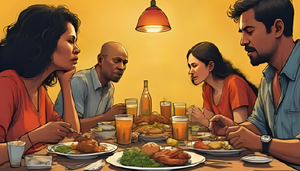
- “I feel like I’m surrounded by people but still low‑key lonely.”
- “I love my family and old friends, but I’m craving a community that really gets where I’m at now.”
- “I want 2026 to be the year I stop accepting whatever community I fall into and start choosing one that actually uplifts me.”
We're the most connected generation online and also the loneliest offline. In some surveys, nearly 8 in 10 Gen Zers say they’ve felt lonely, and only a small minority say they never felt lonely in the last year. BIPOC young adults are navigating that loneliness on top of racism, family obligations, and systems not built for us, which is why community care, not just self‑care, is so important.

“The greatness of a community is most accurately measured by the compassionate actions of its members.” – Coretta Scott King
What is community care vs. self‑care?❓
Self‑care = what you do for yourself (rest, therapy, journaling, walks, boundaries).
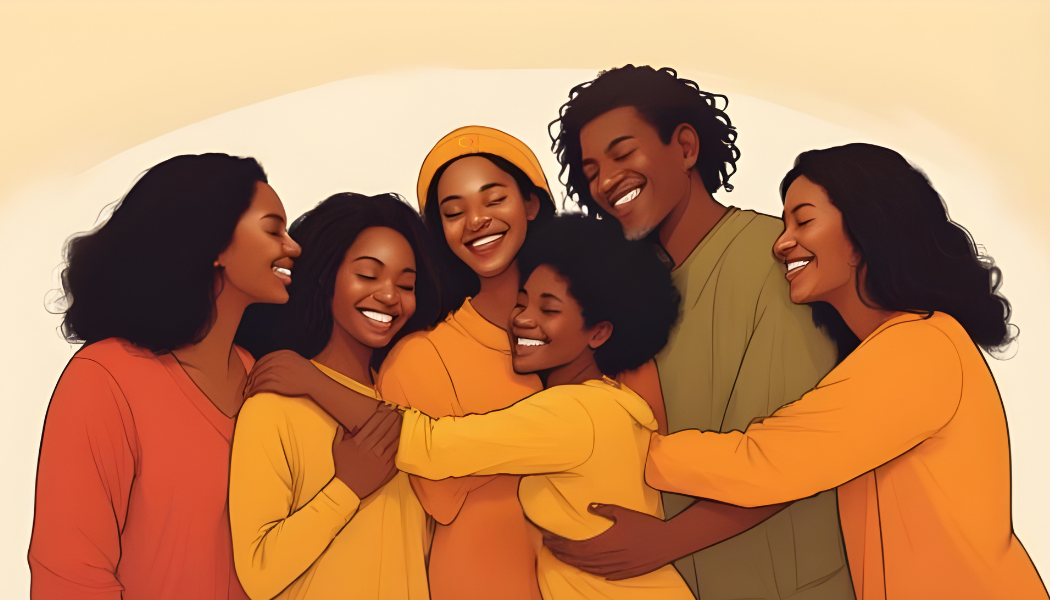
Community care = what we do for each other.
Community care can look like:
- Sharing rides, meals, or money when someone is struggling.
- Checking in before things become a crisis, not just after.
- Creating group chats, study circles, or mutual aid threads where everyone contributes what they can.
At its best, community care is:
- Shared: No one person is the permanent “strong one.”
- Intentional: People show up on purpose, not just by accident.
- Reciprocal over time: Everyone gives and receives, even if it’s not perfectly equal in each moment.
Why does Gen Z need community care so much? 🧠
Recent research paints a clear picture:
- Large majorities of Gen Z say they’ve felt lonely, with only a small minority reporting they never felt lonely in the last year.
- Studies on Gen Z mental health find that many young adults feel like they don’t matter or lack support from others, at higher rates than older generations.
- At the same time, Gen Z reports strong values around connection, equity, and care, and many say in‑person relationships feel more meaningful than digital ones.
So we have a weird mix: we care about community, but we’re exhausted, anxious, and unsure where we actually belong. Community care is one answer to that gap.
How does community care show up in BIPOC spaces? 🧡
For BIPOC communities, community care has deep roots:
- Mutual aid and informal networks have historically provided food, housing support, health care, and safety when institutions were segregated, underfunded, or openly hostile.
- Community spaces (such as churches, cultural centers, barbershops, salons, student orgs, and grassroots groups) have doubled as mental health support and organizing hubs.
Newer work around BIPOC mental health highlights that:
- Culturally grounded community spaces reduce stigma, isolation, and shame around mental health and help people feel seen, not pathologized.
- Young BIPOC leaders are building peer support, mutual aid, and culturally specific resources to fill gaps in traditional services.
So when we talk about community care in 2026, we’re not starting from scratch, we’re updating a legacy.
What does chosen community look like in 2026? 🌱
Loneliness data + Gen Z values = a big question: “Who are my people, actually?”
- In one survey, only about 15% of Gen Z said they never felt lonely in the past year; many pointed to low self‑esteem, mental health challenges, and being single as factors.
- RNA and MHA data show that around one in three Gen Z young adults feel like they don’t matter to others or don’t feel supported more than older generations.
Chosen community in 2026 might look like:
- A group chat that checks on your mental health, not just your memes.
- Friends who remember your big days and show up when it’s hard, not only when they’re bored.
- Spaces (online or offline) where your identities (BIPOC, first‑gen, queer, disabled, immigrant, low‑income) are understood, not constantly debated.
The world is worlding: climate anxiety, politics, money stress, and algorithms. Community care is choosing to build a net, not just be one.
How does community care support mental health? 🧩
Research around community, mutual aid, and mental health shows:
- Strong social ties can buffer stress, reduce depression, and help people recover better after crises.
- Community‑based support (including mutual aid) gives people a sense of agency and belonging, which directly helps with anxiety and climate distress.
- Gen Z is driving new mental health models that combine peer support, online spaces, and community resources, not just traditional therapy.
Community care doesn’t replace self‑care or professional help. It adds a layer:
- You’re not the only one holding everything.
- You have people to text when the headlines feel heavy.
- You’re allowed to need support, not just offer it.

"Belongingness entails an unwavering commitment to not simply tolerating and respecting difference, but to ensuring that all people are welcome and feel that they belong." – john a. powell
Use these 5 questions to imagine your 2026 community care plan:
- Who do YOU want in your 2026 community, and how do they support you?
- Where do YOU feel safest to be yourself, and where do YOU feel like you’re performing?
- What does “chosen family” mean to YOU?
- Where are YOU giving the most community care, and where do YOU want more back?
- What is one upgrade YOU want to make to your community life this year?

"You can’t pour from an empty cup. Take care of yourself first." – Audre Lorde
Click on the dropdowns below to see the easy action items:
Do one of these things TODAY 👇
- Map your community circle: Draw three circles (Inner, Middle, Outer) and jot initials in each. Notice who YOU might want closer, and where YOU want more distance.
- Spot one new community space: Look up one group (campus org, Discord, faith/cultural group, mutual aid, hobby club) and save it. Just notice what feels interesting.
- Send one care message: Text or DM someone: “Thinking of you, how are you really?” or “I appreciate you for ___.” Practice the level of care YOU want more of.
Say one (or all) of these affirmations out loud 👇
- “I deserve a community that uplifts me.”
- “I’m allowed to choose my people.”
- “Community care includes me, too.”
- “It’s okay to outgrow unsafe spaces.”
- “I can find a community that fits who I’m becoming.”
Channel that feeling 👇
Feeling lonely or left out? Remind yourself it’s not just you. Send one low‑stakes reach‑out (message, comment, invite) to start rebuilding connection.
Feeling drained from always being “the strong one”? Ask, “Where can I pull back 5%?” Let someone else plan, decide, or check in this time.
Feeling hopeful and ready? Pick one concrete move: join a group, show up to one event, or invite a few people to a regular check‑in.
Some vibes to close us out
We get to be intentional about who we stand next to.
We don’t have to stay in spaces that drain us or demand constant code switching just to belong.
We can choose and build communities that share our values, understand our identities, and practice reciprocity.
YOU got this. 💭✨
Happy Black History Month! ✊🏾
Sources
- "How Gen Z is shaping a new era of mental‑health care." MSU Denver (2024).
- "Mutual Aid 101: History, Politics, and Organizational Structures of Community Care." CUNY Urban Food Policy Institute (2023).
- "From Self-Care to Community Care." Well-Being at Iowa (2023).

Dig into this topic deeper by signing up for our FREE newsletter.
You'll be able to download the reflection worksheet to put all these actions into one page.
Once you're in, come back to this page and download your new go-to resource.
This post is for subscribers only